
Market entry
VARTA Automotive batteries in Kenya: planning a range for garages and parts distributors
A phased B2B framework for Kenyan automotive buyers: map vehicle applications, verify SLI, EFB and AGM fitment, and discuss reference-level availability before any export decision.
By EADL Editorial Team
- VARTA Automotive
- Kenya
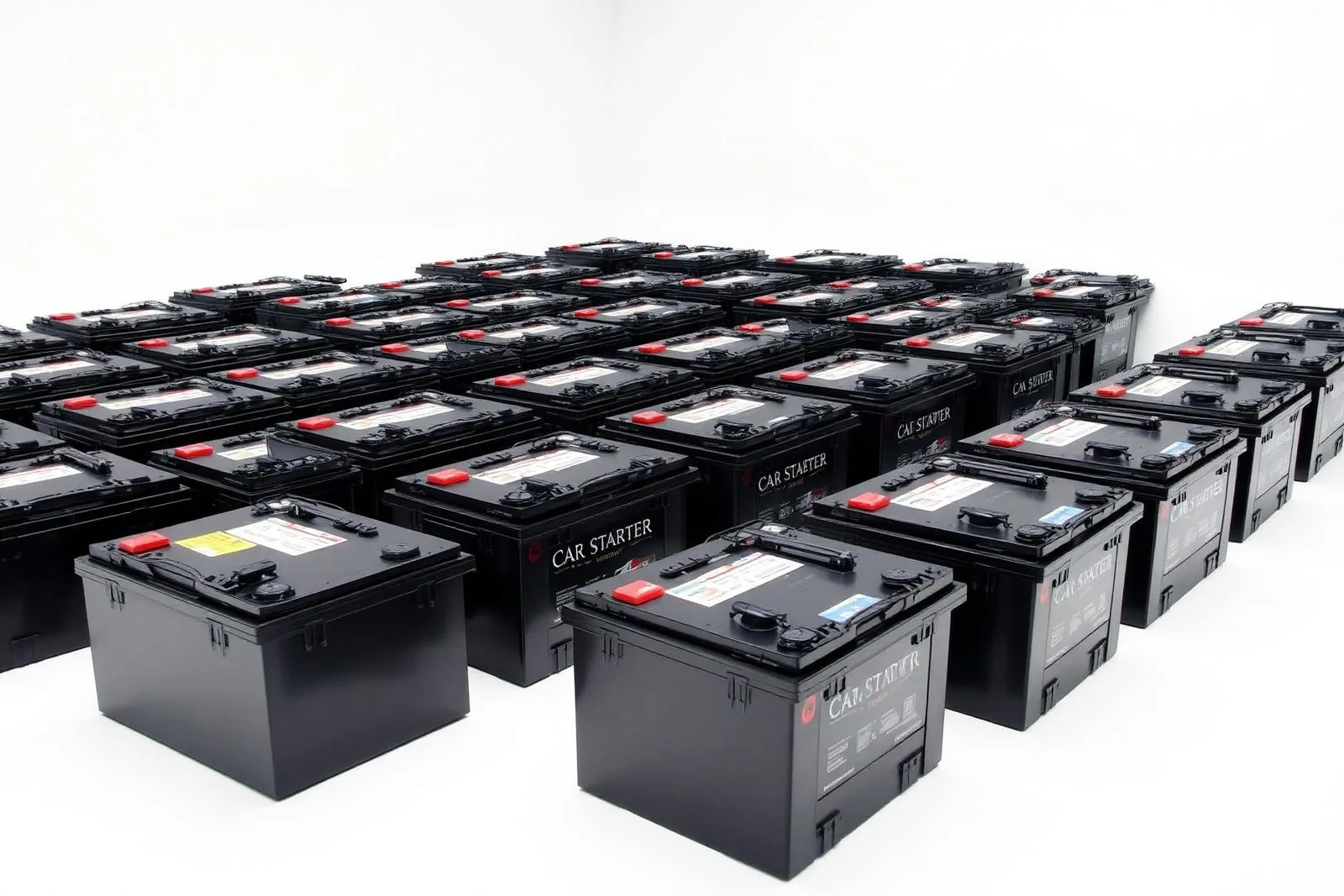
To plan VARTA Automotive batteries for Kenya’s garages and parts distributors, start with vehicles actually served, not a catalogue-wide order. Map each application to conventional SLI, EFB or AGM using manufacturer fitment information, then build a phased range around documented workshop enquiries. Agree handling, testing and warranty intake before expanding. Finally, verify reference-level availability and the import dossier for the proposed shipment.
Kenya is not confirmed as an existing EADL VARTA Automotive distribution right. This article proposes a buying framework; it does not establish Kenyan stock, local presence, authorised-distributor status, exclusivity or product availability. The Kenya VARTA Automotive page is a starting point for an export discussion, not proof of those conditions.
Key takeaways — EADL analysis: identify vehicle applications first; separate SLI, EFB and AGM; use a reference/fitment lookup rather than visual substitution; expand only against documented needs; agree storage, testing and warranty intake; confirm each reference and shipment’s documentation before commitment.
Verified technology families: what the manufacturer confirms
The official VARTA Automotive product overview distinguishes the following families. These are manufacturer application descriptions, not a list of references available for Kenya. The manufacturer also provides a battery finder to support vehicle-based selection.
| Verified family | Manufacturer application description | Buyer’s check before selection |
|---|---|---|
| Dynamic SLI | Conventional vehicles without start-stop, with basic energy needs | Confirm the exact conventional-vehicle application and replacement specification |
| Dynamic EFB | Vehicles with start-stop and increased energy needs | Check the vehicle’s specified technology and matching reference |
| Dynamic AGM | Start-stop vehicles and electric vehicles with advanced energy needs | Verify the battery’s vehicle-specific role and fitment; do not infer traction-battery compatibility |
EADL analysis: family names organise the range, but cannot establish interchangeability. A technology label alone does not answer whether a battery fits a vehicle. No model reference, capacity, performance figure or substitution rule is assumed here.
Map applications before discussing order breadth
For an automotive importer or battery wholesaler, the useful starting document is an application register. Ask participating garages and parts buyers for vehicle make, model, year, engine or variant, start-stop equipment and the existing battery identification where readable. Record uncertainty instead of converting incomplete information into a guessed reference.
Use reference and fitment lookup together
EADL analysis: consult the manufacturer’s battery finder and reference documentation for each application. Compare the suggested technology and documented fitment details, including dimensions, terminal arrangement, mounting and electrical specification where supplied. Where information conflicts, request technical clarification before quoting a substitute. Do not select by case appearance alone.
Start-stop presence is an important selection input, not the entire decision. A garage should also confirm the vehicle’s original requirements and any documented replacement procedure. Installation, coding or registration requirements must come from the relevant vehicle and battery guidance, not a universal rule invented for the range. Keep the lookup result with the commercial reference record.
Build the range in three evidence-led phases
EADL analysis: a phased battery range for garages in Kenya separates confirmed applications from exploratory enquiries. It does not imply that one technology dominates Kenyan demand. A distributor serving a different vehicle mix may sequence the phases differently.
| Phase | Range-planning task | Evidence needed to move forward |
|---|---|---|
| 1 — Documented core | Map conventional SLI applications and record EFB/AGM enquiries separately | Vehicle details, verified fitment and reference-level availability response |
| 2 — Targeted start-stop coverage | Add EFB or AGM references for identified workshop applications | Confirmed technology requirements, technical documentation and workshop readiness |
| 3 — Controlled extension | Review uncovered applications and adjust the proposed selection | Enquiry history, fitment gaps, traceable returns and agreed handling procedures |
Phase 1: make the proposed core explainable
Keep a shared list showing application, technology, reference under consideration and confirmation status. Conventional SLI may form a starting group where documented vehicles justify it; that is not a recommendation to replace required EFB or AGM with SLI. Mark unresolved enquiries as pending rather than promising coverage.
Phase 2: add complexity only with support
An AGM EFB battery range for Kenya should be linked to specific vehicle needs and capable installation channels. Ask garages what information they need to identify, test and fit the selected references. Provide verified product documentation and a contact route for unresolved technical questions before broadening the selection.
Phase 3: review gaps rather than multiplying variants
Track enquiries that could not be matched, incorrect selections caught before installation and the reasons for returns. Use those records to propose additions or remove duplication. No universal order quantity, turnover threshold or fixed ratio between SLI, EFB and AGM is recommended; the decision depends on the documented channel brief.
Design the channel around responsibility
EADL analysis: automotive importers assemble the commercial and shipping dossier; battery wholesalers coordinate reference information and allocation; parts distributors translate applications into identifiable listings; garages verify the vehicle and installation. Define who resolves fitment questions before an order becomes a workshop commitment.
For car battery wholesale in Kenya, a shared reference sheet should keep the application description, technology and confirmation status consistent across the chain. Garage networks need a clear escalation contact; parts distributors need accurate searchable identifiers. Agree how revised fitment information reaches downstream users. This framework describes potential partners, not existing EADL Kenyan customers or facilities.
Agree storage, rotation, testing and warranty intake
EADL analysis: nominate a handling owner and use the selected reference’s manufacturer instructions for storage conditions, inspection, charging and testing. Do not introduce a universal storage duration, voltage limit or charging interval. Equipment and procedures should be suitable for the battery technology being handled.
On receipt, record identifiers, delivery condition and visible damage; preserve traceability between receipt and onward sale. Organise rotation using receipt records and documented condition checks, rather than treating every unit as equivalent because it arrived together. Record tests with date, equipment, method and result so subsequent decisions have an auditable basis.
A warranty-intake process should capture the invoice, battery identification, vehicle application, installation details, symptoms and test evidence. Distinguish an intake request from an accepted warranty claim. Applicable terms and the decision-maker must be confirmed commercially; this article promises neither eligibility nor replacement. Keep disputed fitment and suspected vehicle-system issues documented for technical review.
Prepare Kenya’s import dossier at shipment level
KRA’s how-to-import guidance identifies clearing-agent documentation, including import declarations, commercial and pro forma invoices, a Certificate of Conformity for regulated products and an import standards mark when applicable. Verify current requirements for the selected battery references and transport mode with the importer and clearing agent.
The KRA Certificate of Origin notice states that the requirement took effect on 1 July 2025, with full compliance enforced from 1 October 2025 after a transition. Exceptional alternative origin documents are subject to Customs verification and approval, not an automatic substitute. Do not confuse origin evidence with product conformity.
Use the KEBS PVoC resource to seek current conformity guidance. That page was unavailable during our source check; KRA independently confirms the CoC requirement for regulated products. Ask the competent authority or appointed provider to confirm applicability, classification and evidence before shipment rather than assuming every automotive battery follows an identical route.
ACD: containerised cargo destined for Kenyan ports
The KRA ACD platform states that it went live on 3 August 2026 for containerised cargo destined for Kenyan ports. Applicable shipments require a pre-loading ACD reference code. The listed documents are a draft bill of lading, commercial invoice, freight invoice and export declaration; the approved code must be shown on the bill of lading.
Keep this requirement scoped to those containerised shipments. Do not extend it to air, road, RORO or bulk cargo. EADL analysis: assign responsibility for the application and reconcile document identifiers before loading. Confirm the current operational instructions for the actual shipment; an ACD reference does not replace other customs or conformity documents.
FAQ — decisions for automotive buyers
Should the initial range include all three technologies?
Only where documented applications justify them. EADL analysis: list unmet EFB and AGM enquiries alongside the proposed SLI core, then verify references before extending. No national demand mix is assumed.
Can SLI replace an EFB or AGM battery?
Do not assume so. Use manufacturer fitment guidance and the vehicle’s requirements. Technology, physical compatibility and installation procedure must be checked for the exact application before any substitution.
Does this article confirm a Kenyan distributor or available stock?
No. Kenyan distribution rights, local presence and availability are not confirmed. An enquiry to EADL requests a reference-level assessment and export discussion; it is not confirmation of supply.
Does every shipment require an ACD reference?
This article’s verified ACD statement concerns applicable containerised cargo destined for Kenyan ports. Do not generalise it to other modes. Confirm the shipment scope and current instructions before loading.
What should an importer send to EADL?
Send the company profile, channels served, vehicle application register, technologies sought and proposed shipment mode. Identify unconfirmed references and documentation questions explicitly so the discussion addresses actual fitment and export feasibility.
Conclusion: request a reference-level export discussion
EADL analysis: a credible range links each proposed battery to a verified application, a responsible channel and a traceable handling process. Explore the VARTA Automotive brand page and Kenya market page, then contact EADL to request reference-level availability and an export discussion. No Kenyan distribution right or supply commitment is implied.
Official VARTA and KRA sources were checked on 8 October 2026; the KEBS page access limitation is disclosed above. Reconfirm shipment requirements before execution. The next internal editorial review is recorded separately, not presented as an operational compliance guarantee.
Related commercial pages: Discuss VARTA Automotive references for a Kenya export project
Related commercial pages