Brand & categoryMarket entry
Russell Hobbs in Liberia: building a focused launch range for distributors
Begin with a small kettle-and-toaster breakfast core, prepare reference-specific documents and warranty support, then test food preparation or cooking only after channel evidence.
By EADL Editorial Team
- Russell Hobbs
- Liberia
For a distributor considering Russell Hobbs in Liberia, begin with a small breakfast core of kettles and toasters, give each reference a distinct role, and prepare its documentation and warranty support before committing. Add limited food-preparation or cooking references only when retailer feedback and measured sell-through justify a test. This is EADL analysis, not a statement of Liberian demand or reference-level availability.
Essential summary
- Keep the opening range understandable: a kettle core and complementary toasters, not catalogue-wide coverage.
- Separate manufacturer product facts from proposed commercial roles.
- Verify cartons, electrical configuration, instructions and warranty evidence for the exact version.
- Prepare Liberia-specific import documents and a documented service pathway before selection.
- Expand according to sales to end users, recurring questions and return causes, without universal quantities or targets.
Official product facts: the catalogue is not an export offer
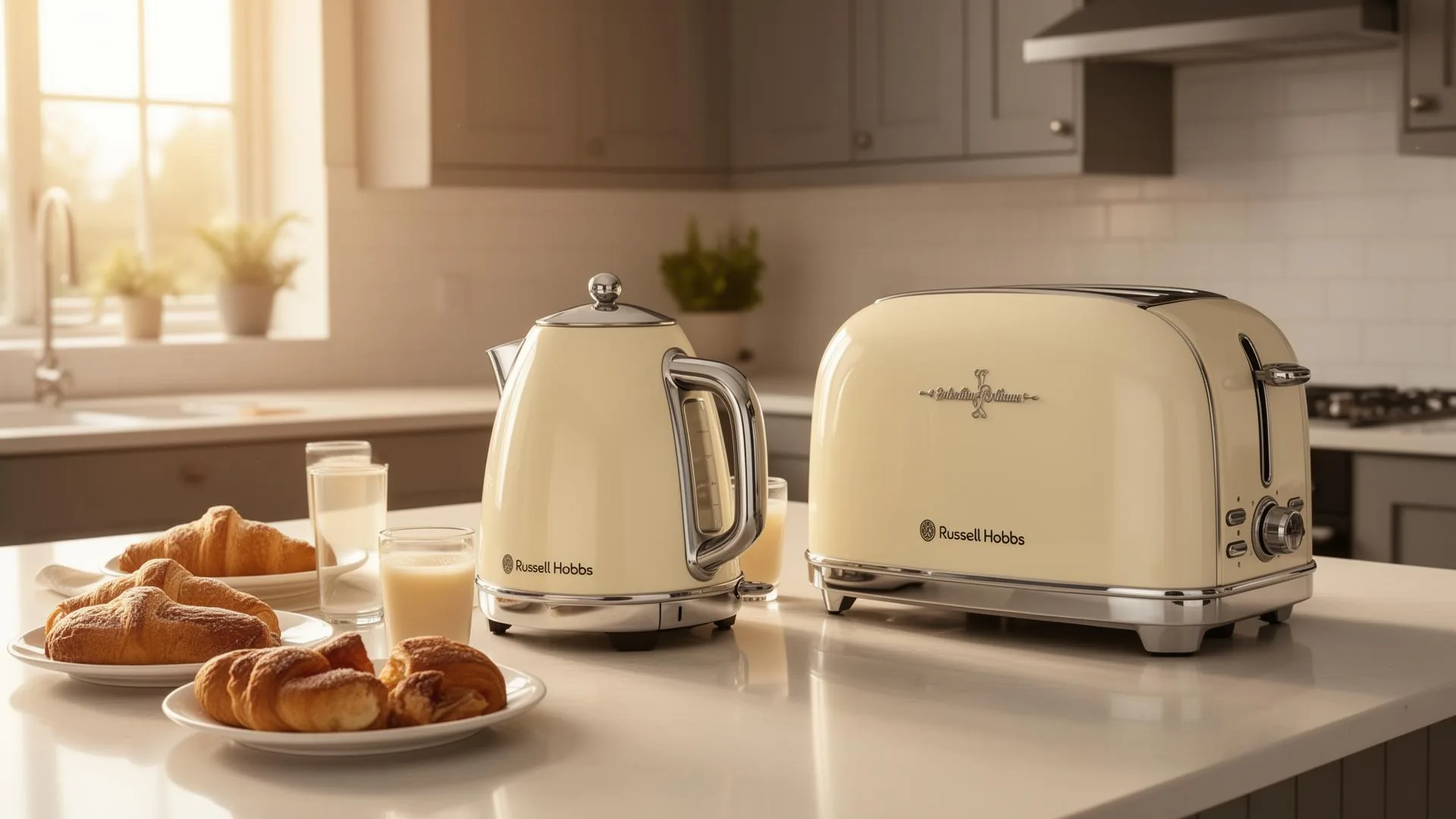
The official Russell Hobbs UK website, checked on 15 October 2026, lists kettles, toasters and kettle-and-toaster sets. Its navigation also includes mixers, blenders and juicers, slow cookers and multicookers, and air fryers. These verified families establish possible areas of investigation, not a recommended opening order.
Use the official kettle and toaster pages to locate product information. Then obtain the precise reference sheet and instructions before describing capacity, controls, cleaning or accessories. A family heading is not a specification shared by every model.
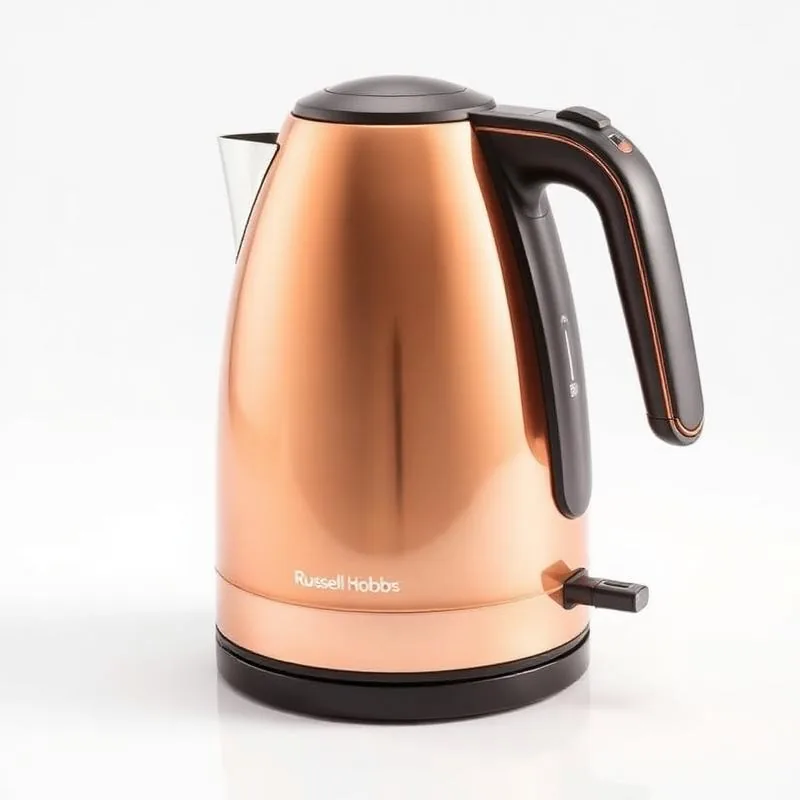
No UK listing establishes the electrical version, warranty applicability or export eligibility for Liberia. The photograph here illustrates a Russell Hobbs kettle; it is not a selected reference or evidence of products held in Liberia. The following phased approach is EADL's buying framework.
EADL analysis: build the breakfast core first
Give kettles a clear comparison role
Choose a small set of candidates whose differences can be explained without a lengthy sales script. Compare documented capacity, dimensions, handling and cleaning instructions. Avoid opening with several finishes that otherwise fulfil the same role. A visual difference alone may complicate catalogue management without answering a distinct customer question.
Record why each candidate belongs: everyday breakfast use, a different documented capacity, or a demonstrable design preference raised by buyers. These are hypotheses to test, not established preferences among Liberian households.
Make toasters complement rather than duplicate
For each toaster candidate, record the documented format, controls and instructions. Pair its presentation with a kettle only where the actual designs support that comparison. Matching appearance must not imply interchangeable parts, identical electrical requirements or shared warranty conditions.
A retailer should be able to describe each reference in one sentence. If two candidates require the same explanation, simplify before adding another. This helps electrical wholesalers maintain consistent descriptions when supplying several store formats.
| Proposed phase | Reference role | Evidence before selection | Expansion signal |
|---|---|---|---|
| Small kettle core | Clear breakfast comparison | Exact specification, version and documents | Recorded end-user sales and understood questions |
| Complementary toasters | Complete a focused breakfast display | Format, instructions and distinct role | Retailers can explain the difference consistently |
| Limited preparation or cooking test | Answer a specific additional use | Product sheet, service readiness and channel fit | Evidence from the breakfast core supports a trial |
Extend only when a channel can support the reference
Consider a blender or another verified preparation family only after buyers identify a specific use and can explain operation, cleaning and included accessories. A cooking reference needs the same discipline: identify the actual use, verify instructions and assess whether the selected channel can handle questions and service intake.
An appliance wholesaler in Monrovia might request an extension for specialist stores; a retail chain might report a different need. Treat those reports as evidence to collect, not assumptions about the market. Professional e-commerce operators should demonstrate that they can publish accurate product pages and receive after-sales enquiries before an extension is approved.
There is no universal opening quantity, assortment ratio or expansion threshold. Define a trial appropriate to the buyer's own channels, then review its results before widening the range.
Keep shelf presentation and online descriptions aligned
Give each reference one identity across the order proposal, carton record, shelf label and online page. Separate verified features from presentation choices. For importers comparing European kitchen appliances for Liberia, geographical sourcing alone does not establish technical suitability.
On shelves, group the breakfast core so differences remain visible. Use the correct photograph and a concise description of the reference's role. For online listings, identify what is included and distinguish illustrative accessories from confirmed carton contents. Demonstrations must follow the manufacturer's instructions and the retailer's safety arrangements.
Maintain a shared reference sheet for wholesalers, specialist stores and chain buyers. When a description changes, update all channels together rather than leaving incompatible versions in circulation.
Verify the reference dossier before commitment
Ask for carton dimensions, units per carton, weights, identifiers and labelling photographs. Check that the invoice description, packing list and physical product match. Obtain evidence of voltage, frequency, plug configuration and the rating label for the exact version; do not assume that a UK catalogue or European origin proves suitability.
Check readable instructions, safety warnings and warranty documents for the intended sales channel. Resolve any proposed electrical adaptation with competent parties rather than improvising an accessory. Retain the documents with their reference and version identifiers.
| Control point | Evidence to collect | Decision it supports |
|---|---|---|
| Carton and reference identity | Dimensions, quantities, labels and packing details | Consistent ordering, receipt and descriptions |
| Electrical configuration | Rating label, voltage/frequency and plug evidence | Technical review of the exact version |
| Instructions and warranty | Applicable documents and written claims process | Accurate information at sale and service intake |
| Authenticity and service | Originality evidence and verified service arrangements | Import review and documented support pathway |
| Import records | Declaration documents and traceable product details | Transaction review with the responsible importer |
Liberia: distinguish official requirements from planning advice
Customs documentation and importer responsibility
The Liberia Revenue Authority provides customs tools and tariff search. Its Customs Fact Sheet, checked on 15 October 2026, describes import declaration and supporting documents: bill of lading or airway bill, detailed commercial invoice, packing list and tax clearance. The list is not exhaustive; additional permits or certificates may depend on the product.
The fact sheet also attributes a broker's clearance declarations and actions to the importer. Using a broker therefore does not transfer away the importer's responsibility. Confirm classification, declaration requirements and supporting evidence for the contemplated transaction, rather than treating a general webpage as clearance approval.
Electronics and electrical-device guidelines
The Ministry of Commerce and Industry published administrative guidelines for electronics and electrical devices, dated 15 July 2024 and effective 1 August 2024. The document was checked on 15 October 2026.
Section 1.1 requires a manufacturer warranty of at least one year covering manufacturing and material defects under normal use. Section 1.3 requires written disclosure of terms, claims process, coverage and duration, accessible and provided at sale. This requirement is not proof that a particular UK reference already carries compliant Liberian cover.
Sections 3.1–3.2 require verification of manufacturer originality documentation and authenticity through recognised international bodies or direct manufacturer verification. Sections 4.1–4.3 require importers to establish or associate with certified service centres in Liberia, with appropriate technical capability and spare parts, and inform consumers how to access service.
Sections 6.1–6.3 require Import Permit Declaration forms before importation, detailed records including specifications, quantities, batch numbers and compliance certificates, and annual compliance reports covering warranty services, customer feedback and environmental compliance. These selected provisions are not an exhaustive legal checklist. Confirm current applicability and implementation with the Ministry and the clearing professional for each transaction; rules may change.
Prepare returns and after-sales intake, then measure
Before selection, identify the responsible intake contact and confirmed service pathway. Collect reference, purchase evidence, serial or batch identifier where applicable, symptoms and relevant photographs. Separate reception damage, description errors, operating questions and suspected defects without prejudging warranty coverage. Record the outcome and communicate the documented claims process to retailers.
Track end-user sales by reference and channel, not only opening purchases by resellers. Read returns alongside display quality, product-page accuracy and recurring questions. Correct misleading descriptions before interpreting weak sales as rejection of the appliance. Extend, retain or simplify the range using this evidence, not assumed demand.
Five FAQs for professional buyers
What should the opening range contain?
A small kettle-and-toaster breakfast core with a distinct role for each reference. Preparation and cooking candidates follow only after channel evidence and document review.
Does the UK catalogue confirm Liberia availability?
No. It documents product families and references. Request reference-level availability and separately confirm the electrical version, documents and applicable warranty.
When should a wholesaler add cooking appliances?
When measured sales and retailer questions identify a specific use, and the chosen channel can explain the reference and handle service intake.
Is a UK warranty statement enough?
No. Verify applicable manufacturer cover and written terms against the Ministry's requirements, including the service pathway, for the intended transaction.
Does using a broker remove importer responsibility?
No. The LRA fact sheet attributes clearance actions and declarations by the broker to the importer. Confirm the dossier and retain supporting evidence.
Conclusion: discuss a documented Liberia launch
Build a focused range around clear product roles, verified documents and measurable channel evidence. Explore Russell Hobbs in Liberia, the Russell Hobbs brand page and the Liberia market page. Then contact EADL to request the catalogue and reference-level availability, or discuss a Liberia distribution project. Share your channels, candidate families and document questions to frame the professional discussion.
Related commercial pages: Discuss a Russell Hobbs distribution project in Liberia
Related commercial pages