
Market entryBrand & category
Entering Sierra Leone with Russell Hobbs: range, order size and partner profile
Start with a focused kettle-and-toaster offer, size the opening order against documented channel and service capacity, and qualify the importer before expanding.
By EADL Editorial Team
- Russell Hobbs
- Sierra Leone
For Russell Hobbs market entry in Sierra Leone, begin with a focused kettle-and-toaster offer, match the opening order to documented selling capacity, and qualify the importer before extending the range. Add food-preparation or cooking appliances only after measured channel evidence and service readiness support them. This is EADL's commercial planning framework, not verified Sierra Leone demand, a universal minimum order or a promise of product availability.
Essential summary
- Give the breakfast core distinct, documented product roles.
- Size commitments against confirmed doors, displays, reporting and replenishment ability.
- Assess customs capability and after-sales arrangements alongside channel reach.
- Verify the exact electrical version, packaging and import dossier before shipment.
- Expand only when sales evidence and operational capacity justify the next stage.
Verified product families, not a destination offer
The official Russell Hobbs kettle, toaster, food-preparation and cooking-appliance pages support these broad families. They do not establish export eligibility, electrical suitability or availability for Sierra Leone. UK website stock and retail pricing are not evidence for this project.
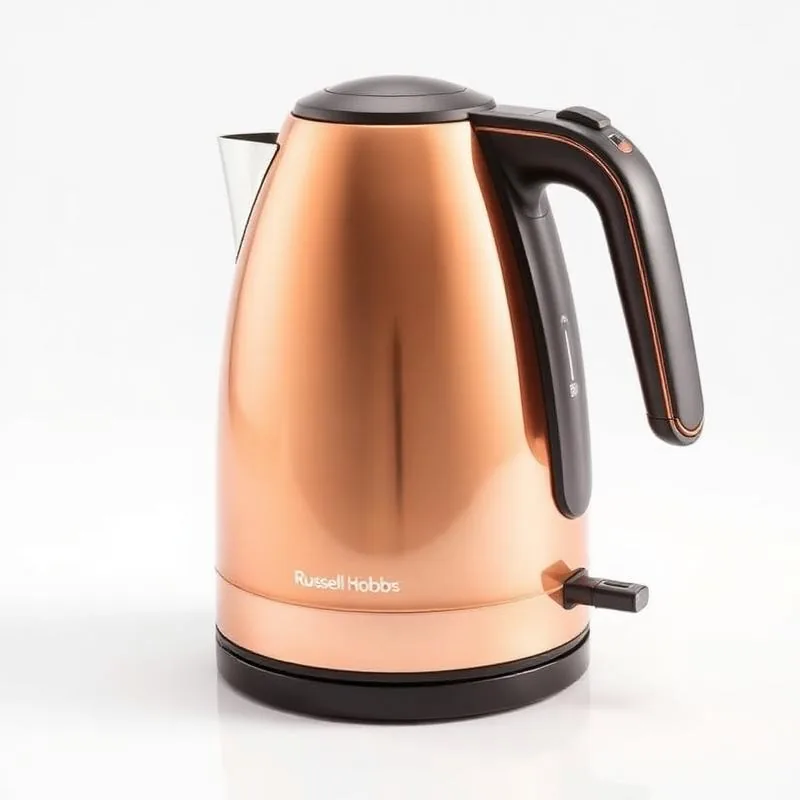
Select candidates from verified reference sheets rather than borrowing catalogue claims. Check the model identifier, version, instructions and actual accessories before creating a buyer proposal. The kettle photograph illustrates a product family; it neither selects a reference nor implies local inventory.
EADL analysis: three stages with decision gates
Stage one: a legible breakfast core
Start with kettle and toaster candidates that buyers can distinguish clearly. Document the role of each reference through verified specifications and the intended display. Avoid several nearly identical choices whose only justification is catalogue breadth. Chains and specialist retailers should be able to explain the range consistently.
Stage two: selective preparation or cooking additions
Investigate additions only when recorded sales, retailer questions or documented professional buyer requests identify a specific gap. Check whether the channel can explain operation, present accessories accurately and handle service enquiries. A buyer request is evidence to investigate, not proof of nationwide demand.
Stage three: later expansion
Widen coverage after reviewing reference-level results and resolving operational weaknesses. Retain, revise or remove candidates before adding more. Expansion may involve another channel or a broader family offer, but neither should outrun reporting, documentation or after-sales capability.
| Launch stage | Proposed scope | Evidence needed | Decision gate |
|---|---|---|---|
| Core | Focused kettles and toasters | Confirmed doors, display plan, exact reference dossier | Buyer can present and support each reference |
| Selective additions | Limited preparation or cooking candidates | Recorded sales, identified use, service review | Specific gap and channel capability justify a test |
| Later expansion | Broader validated coverage | Repeatable reporting and replenishment process | Existing offer works without unresolved operational gaps |
Decide opening order size without a universal quantity
Treat the first order as a documented commitment by reference and channel, not a standard number copied between importers. Ask the buyer to separate confirmed outlets from prospective accounts. A distributor's address list is not the same as doors ready to receive and display the offer.
Record display capacity for each confirmed door, including whether products can be demonstrated safely under their instructions. Separate presentation needs from saleable units in the proposal. Aggregate only commitments that the buyer can explain and support; do not fill unallocated quantities with optimistic forecasts.
Agree a sell-through review cadence before ordering. The interval should suit the buyer's reporting ability and replenishment process, not an invented market norm. Review sales to end users, remaining units, returns and display execution together. An opening purchase by a reseller does not establish end-user demand.
Check service capacity against the contemplated coverage. Identify who receives enquiries, records reference and purchase evidence, and escalates technical questions. Obtain applicable warranty and service documents for each version; do not invent coverage or assume UK terms apply to the destination.
Packaging and document readiness are additional gates. Confirm carton quantities, dimensions, weights and labels, then reconcile the proposal with feasible carton multiples. Verify the actual replenishment options and transaction conditions separately. If documents, working capital or reporting are incomplete, narrow the commitment rather than treating a larger order as a solution.
Qualify the importer with an evidence scorecard
Use the following EADL scorecard during professional discussions. Mark each criterion as documented, pending or inadequate and name the person responsible for closing gaps. Do not average away unresolved regulatory or service issues: critical gaps require resolution before shipment, even when channel reach appears strong.
| Qualification criterion | Evidence to request | Warning to resolve |
|---|---|---|
| Customs capability | TIN, clearing-agent arrangements, documented declaration workflow | No responsible owner for the import dossier |
| Channel reach | Confirmed account types and doors suitable for the offer | Prospective contacts presented as committed distribution |
| Sales reporting | Reference-level sales and returns reporting process | Reseller purchases treated as final demand |
| Merchandising | Shelf or online presentation plan, accurate product records | Features or accessories described without evidence |
| After-sales | Intake contact, escalation pathway, applicable written terms | Unsupported warranty or service promises |
| Working-capital discipline | Buyer-owned commitment and replenishment approval process | Quantities disconnected from cash and channel capacity |
| Regulatory verification | Reference-specific questions and authority confirmations | General country guidance treated as product approval |
A partner profile is therefore a collection of verifiable capabilities, not a claim that EADL already has a local partner. Wholesalers, chains and specialist retailers may fulfil different functions; establish who imports, who sells, who reports and who handles service.
Verified institutional guidance: prepare the customs dossier
The NRA's Import and Export Procedure describes electronic customs declarations, attached supporting documents, risk-based processing lanes and a TIN requirement before using the customs system. The page contains legacy ASYCUDA++ wording. Describe the durable process as electronic declaration through the customs/ASYCUDA system and reconfirm the current workflow; do not present that legacy version as today's platform.
The NRA's Customs Import Procedure describes an importer engaging a clearing/forwarding agent and supplying transport and transaction documents. The agent registers the declaration and attaches documents. Customs conducts documentary checks and may perform physical checks. This is procedural guidance, not shipment approval.
The Customer Service Charter lists documents including TIN, bill of lading/delivery order, registered declaration, commercial invoice, packing list, valuation form, bank transfer/SWIFT, Classification Valuation Certificate and freight note. Ask the agent and customs which items apply to the actual transaction; the list must not become a universal requirement for every appliance shipment.
The WTO Trade Policy Review corroborates electronic Single Customs Declaration and accompanying-document procedures, and records an ASYCUDA World upgrade in 2019 and Electronic Single Window introduction in 2020. These historical milestones explain why legacy webpages need cautious reading; they do not replace current authority confirmation.
Confirm standards for each electrical reference
The Trade.gov standards overview, a secondary institutional source, describes the Sierra Leone Standards Bureau's standards and conformity-assessment role and possible testing or inspection of electronics.
Before shipment, confirm the exact applicable product standard, conformity document, plug, voltage, frequency, labelling and inspection route with SLSB and customs. Obtain the rating-label evidence, manual, model/version identity, accessory list and carton data. Ensure the invoice and packing list describe the same reference. A category page cannot establish that every appliance follows an identical route.
Five FAQs for professional buyers
What should the initial Russell Hobbs offer contain?
EADL recommends a focused kettle-and-toaster core with documented roles. This is a testable planning approach, not a verified Sierra Leone demand forecast.
Is there a standard opening order quantity?
No universal quantity is proposed. Use confirmed doors, display capacity, review cadence, service readiness, carton data and verified replenishment ability to frame the buyer's commitment.
When should preparation or cooking appliances be added?
After reference-level sales evidence or documented buyer needs identify a gap and the chosen channel can present and support the candidate.
Does an agent make customs checks unnecessary?
No. Agree the declaration workflow and supporting documents with the agent and customs, and retain reference-specific evidence. Agent involvement is not product approval.
Does the UK catalogue confirm destination suitability?
No. Verify availability separately and confirm the exact electrical version, documents, applicable warranty and conformity pathway before shipment.
Conclusion: discuss a qualified market-entry proposal
Build the proposal around a clear breakfast core, defensible opening commitments and a documented importer profile. Explore Russell Hobbs in Sierra Leone, the Russell Hobbs brand hub and the Sierra Leone market page. Then contact EADL to request range and availability verification, an export offer or a distribution discussion. Share confirmed channels, candidate families, reporting capability and unresolved document questions.
Published and updated on 29 October 2026. The manufacturer and institutional sources linked above were reviewed for this article on 29 October 2026. Reconfirm transaction-specific requirements with the competent authorities before shipment.
Related commercial pages: Discuss Russell Hobbs market entry in Sierra Leone
Related commercial pages